SELF-REGULATION SKILLS
EVIDENCE-INFORMED. PRACTICAL. EMPOWERING.
Develop Practical
Self-Regulation & Self-Management Skills
for Stress, Focus and Optimal Performance
Access neuroscience-backed mental wellness tools, guided workbooks, and practical self-regulation techniques. Reduce anxiety, optimize emotional balance, and improve cognitive performance with our evidence-informed resource library.
If you’re new to self-regulation, start with the fundamentals. Learn how self-awareness, observation, and simple daily practice gradually become practical skills that can support better focus, healthier responses to stress, and more confident everyday decision-making.
Evidence-informed
Educational Approach
Independent Reviews
European Publisher
The Self-Regulation Journey
A learnable process you can develop.
Self-management is built on a foundation of self-regulation. It is a learnable process, not a fixed trait. With knowledge, self-awareness, consistent practice, and reflection, you can strengthen the skills you need for emotional regulation and effective daily self-awareness—helping you take control of your time, focus, and stress responses.
Our approach combines neuroscience insights and evidence-informed methods with practical tools you can use every day.
Knowledge
Learn how your mind and body respond to life's demands.
Awareness
Understand your patterns and triggers
Practice
Use simple tools and exercises to build new skills
Self-Regulation
Respond with greater self-awareness, choice, and balance.
Performance
Experience more focus, resilience and wellbeing.
Explore Learning Pathways
Discover topics and tools to support your growth
Explore structured learning pathways designed to help you build practical skills at your own pace. Whether you want to improve focus and attention, strengthen emotional regulation, build resilience, or boost self-management and cognitive performance, each pathway combines guided learning with hands-on practice.
Self-Regulation Training
Master cognitive control systems
Explore →
Stress Resilience
Adapt to pressure with ease
Explore →
Cognitive Performance
Maximize your brain power
Explore →
Focus Enhancement
Sharpen attention and remove distractions
New resources
in development
Relaxation
Reset your inner calm and mind balance
New resources
in development
Emotional Wellbeing
Discover the mind-heart interconnection
New resources
in development
Wellness Education
Find your pathway to daily well-being
New resources
in development
Resource Library
Practical resources to help you learn, practice, and grow
Turn knowledge into practice with worksheets, workbooks, mini-guides, audio exercises, and educational tools designed to help you apply techniques and build effective self-management habits in everyday life. Whether you’re just beginning or continuing your learning journey, our resources help you build practical skills.
Free Resources
Start learning today-no signup required.
Worksheets
Practice Tools
Mini Guides
Checklists
Infographics
Premium Resources
In-depth workbooks and tools for deeper transformation.
Workbooks & eBooks
Assessments & Quizzes
Guided Programs
Templates & Tools
Learning Bundles
Recommended Self-Regulation Technology
Carefully reviewed tools that can support your focus, relaxation, and daily performance.
Explore carefully reviewed wellness technology that can complement your self-awareness practice. From focus training and biometric tracking tools to self-management relaxation technology, our curated selection highlights modern, non-medical devices designed to help you optimize your daily focus, calm, and performance.
Callibri Multi-Sensor
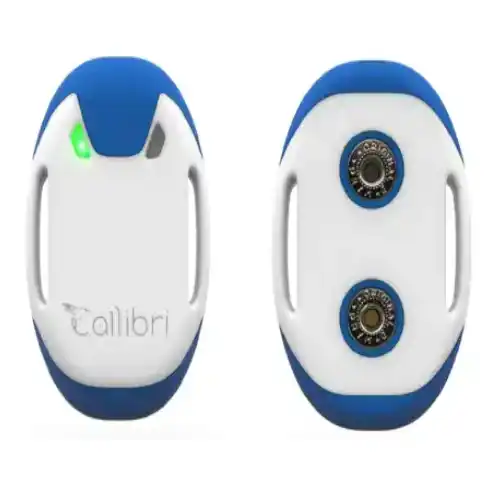
Wearable to support muscle relaxation, mindful breathing, and HRV tracking
Mendi Headband
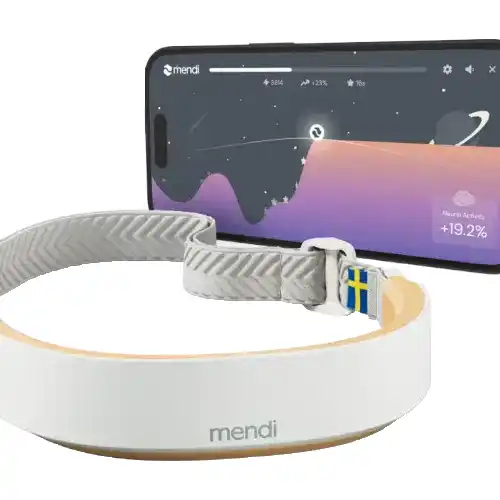
Prefrontal cortex training to optimize daily focus, mental clarity, and performance
BrainBit MINDO
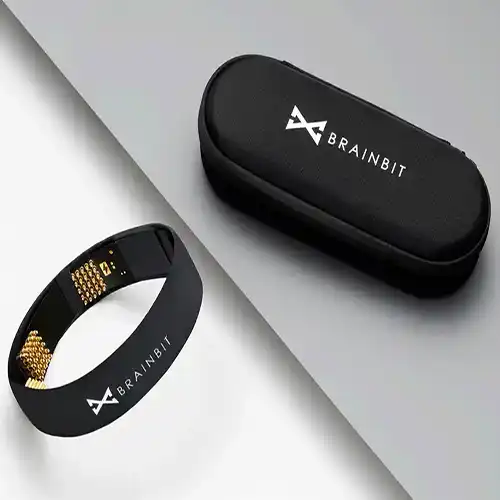
Wireless headband with a mobile app built for guided focus, relaxation, and mindful practice
NeuroVIZR Headset
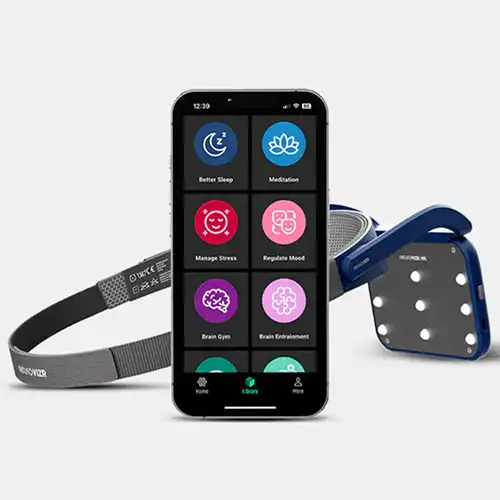
Light and sound mind wellness technology for cognitive state optimization
*Affiliate Disclosure: Some of the links above are affiliate links, meaning that at no additional cost to you, the Self-Regulation Lab may earn a small commission if you decide to make a purchase through our curated recommendations. We only feature hardware that aligns strictly with our scientific and wellness standards.
Our Mission

Self-Regulation Lab was founded to bridge the gap between advanced science and daily well-being. We believe true mental clarity, stress resilience, and optimal performance shouldn’t be a secret reserved for elite research laboratories—they should be practical, accessible tools for everyday life.
Our mission is to empower you with evidence-informed education, structured workbooks, and curated technologies. By giving you the practical resources to master your own internal state, we help you step away from chronic overwhelm and unlock your highest cognitive potential.
Evidence-informed education
Practical & actionable tools
Independent reviews
European publisher (Estonia)
Academic collaboration
Sources & Further Reading
- Baumeister RF, Vohs KD, editors. Handbook of self-regulation: research, theory, and applications. 3rd ed. New York: Guilford Press; 2016. Available from
- Bandura A. Social cognitive theory of self-regulation. Organ Behav Hum Decis Process. 1991 Dec;50(2):248-87. Available from
- Watson DL, Tharp RG. Self-directed behavior: self-modification for personal adjustment. 8th ed. Belmont (CA): Wadsworth/Thomson Learning; 2002. 343 p. Available from
- Holroyd J. Self-leadership and personal resilience in health and social care. London: Learning Matters; 2015. 184 p. DOI:10.4135/9781473917132. Available from
- Neck, C. P. , & Houghton, J. D. (2006). Two decades of self-leadership theory and research: Past developments, present trends, and future possibilities In: Journal of Managerial Psychology, 21, 2006, 4, 270-295. Available from
- Schraw G, Dennison RS. Assessing metacognitive awareness. Contemp Educ Psychol. 1994 Oct;19(4):460-75. Available from
- London M, Sessa VI, Shelley LA. Developing Self-Awareness: Learning Processes for Self- and Interpersonal Growth. Annu Rev Organ Psychol Organ Behav. 2023 Jan 23;10:261-88. doi: 10.1146/annurev-orgpsych-120920-044531. Available from
- Majolo M, Gomes WB, DeCastro TG. Self-Consciousness and Self-Awareness: Associations between Stable and Transitory Levels of Evidence. Behav Sci (Basel). 2023 Jan 30;13(2):117. doi: 10.3390/bs13020117. PMID: 36829345; PMCID: PMC9952303. Available from
Frequently Asked Questions
What are self-regulation skills and can they be learned?
Self-regulation skills are your brain and body’s natural calibration systems. They represent your conscious ability to manage your focus, emotional balance, and internal state under pressure.
Are these learning resources and guides evidence-informed?
Yes, absolutely. Every digital workbook, practical toolkit, and self-calibration framework published by the Self-Regulation Lab is strictly evidence-informed. We translate complex, peer-reviewed neuroscience and behavioral research into practical, step-by-step toolkits you can use every day.
Do I need any prior scientific knowledge to get started?
Not at all. Our entire ecosystem is designed explicitly for beginners, professionals, and anyone seeking greater mental clarity. We intentionally remove complex clinical jargon and dense technical terms.
Are the featured technology reviews completely independent?
Yes. We independently select all hardware, wearable biometric trackers, and cognitive training tools featured on our platform. We only highlight premium, non-medical consumer technologies that meet strict standards for user experience, data consistency, and daily wellness utility.
Where should beginners start and are there free resources?
The best way for beginners to start is to explore our dedicated Learning Pathways and see which mental wellness goals align with their current routine. To support your initial steps, we offer high-quality, completely free resources right here on our platform.
How is self-regulation different from self-management, and how do they work together?
Think of self-regulation as the engine and self-management as the steering wheel. Self-regulation is your ability to understand and manage your internal state (emotions, impulses, focus). Self-management is the practical application of that awareness—the skills you use to organize your tasks, manage your time effectively, make better decisions under pressure, and achieve your goals.